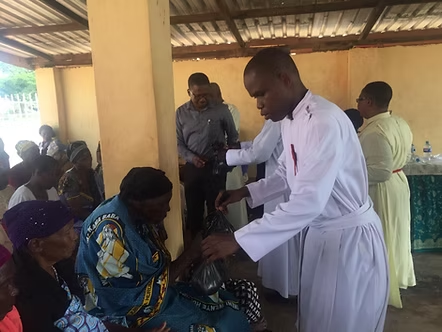
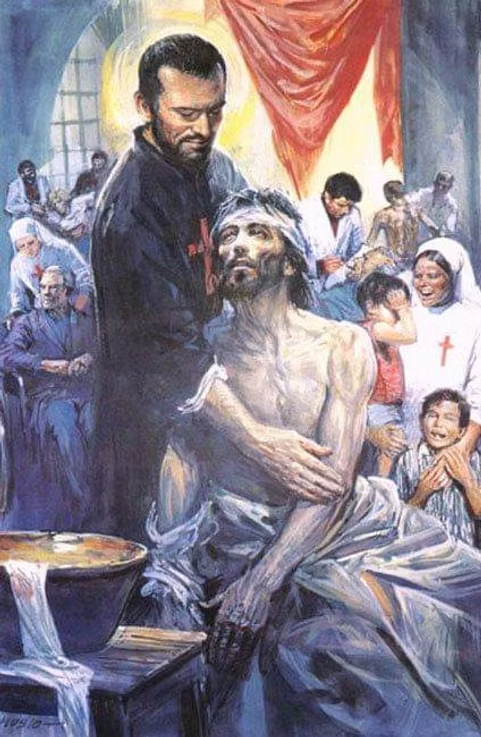
St. Camillus was moved by a real passion to meet the needs of man. He saw so many needs around him that he was moved to exclaim “I would like to have a hundred hands” and thus reach everyone! Animated by this spirit, he gave hospitality at the House of St. Mary Magdalene to a Congregation of laymen who – without taking religious vows – decided to follow in his footsteps and cooperate with him in his charitable efforts. This first idea (1592) was immediately followed in Naples where the first Camillians so involved the ecclesial community that everyone, priests, religious and lay people, dedicated a part of their time and their possessions to caring for the sick in their families or in the hospitals. ‘All of this is owed first and foremost to God and last to our Order…It seemed that our religious constituted an impetus for this kind of care’.
The first biographer of St. Camillus states that ‘he had never read or heard it said that in any other city of Christendom had there been so many nobles who served the sick in hospitals as in Naples’. But it was only after the Second Vatican Council that the idea of sharing the charism with the laity began to take shape and acquire institutional form.
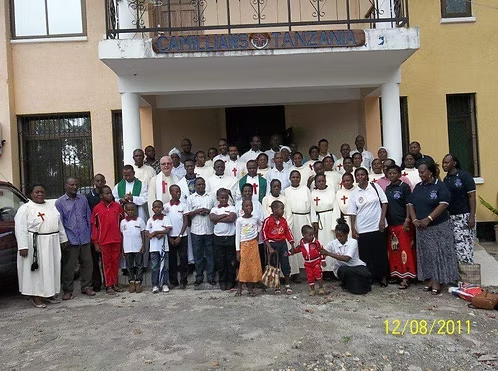
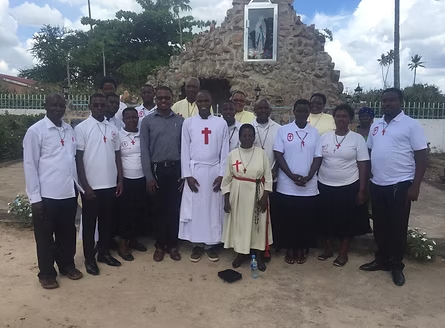
Side by side with thousands of professionals who work in the institutions of the Order, the Lay Camillian Family arose, an organisation made up of people who are committed to living the ideal and the spirit of St. Camillus in service to the sick. It has its own statutes which were approved by the Holy See. Although it is linked to the Order and is animated by the same spirit, it has its own autonomy: it has its own directive body (the central committee) which is elected by the general assembly and remains in office for six years. By now thousands of members belong to the Lay Camillian Family and they are spread throughout the world, even in countries where Camillian religious are not present. Many health-care professionals belong to it, thereby enriching their professionalism with Camillian spirituality.
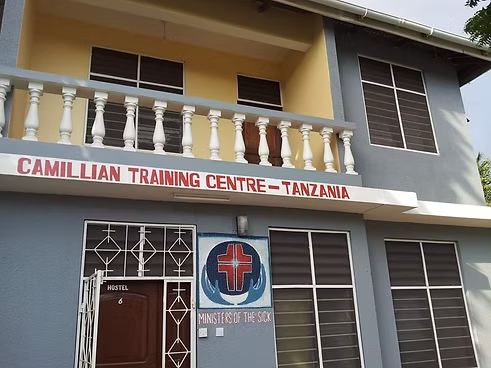
The Lay Camillian Family (LCF) in Tanzania constitute of lay people dedicating their life to the service of the sick. While they live in their own homes, they meet together for prayers and visiting the sick in the hospitals and private homes. They are at times also called to physically serve the sick in the private homes. Some of the LCF members are medical professionals such as nurses and doctors, a number of them are normal people (married and single) with or without any academic papers but who have love in their hands ready to serve the sick as a mother would care for her only child who is sick. At present they are in Dar es Salaam, Tabora and Pemba in Mozambique.
Comments are closed.